

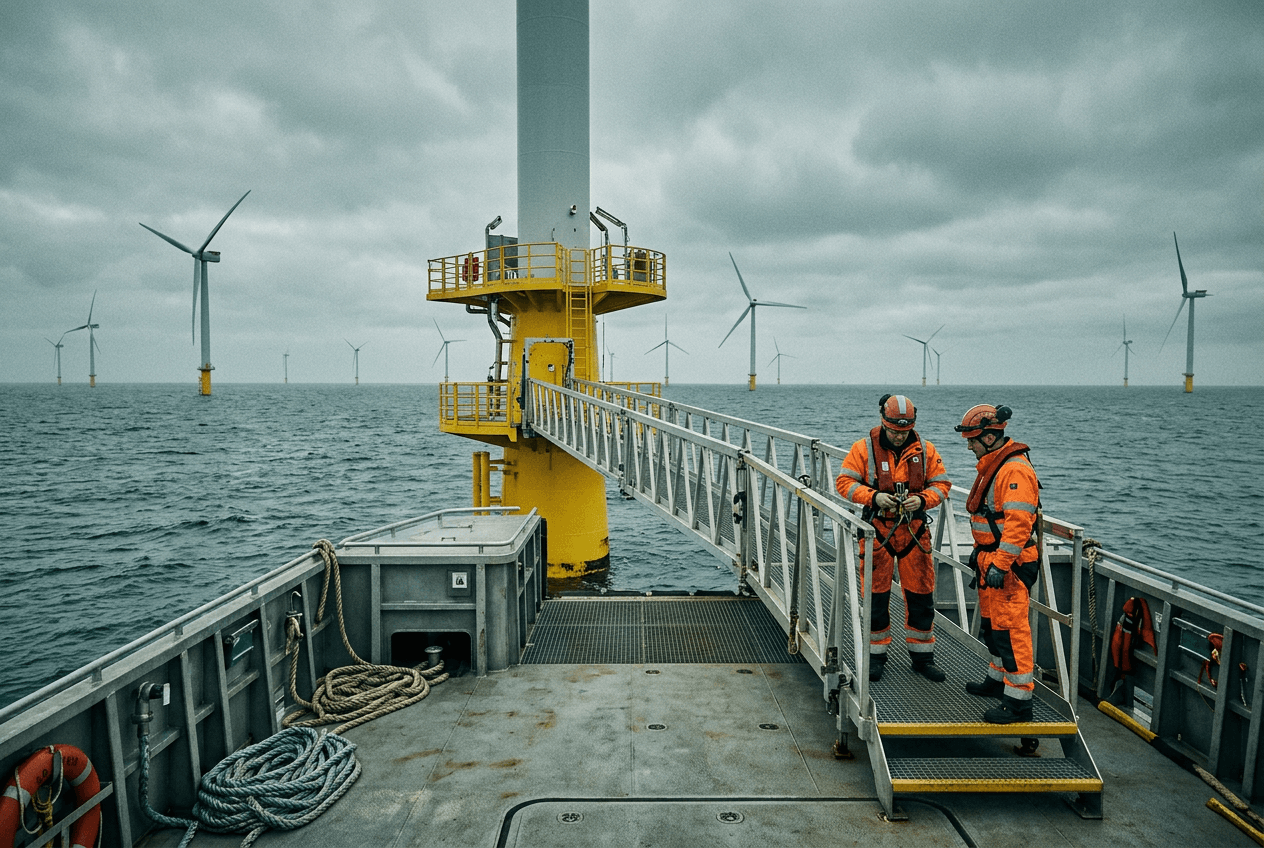
The move toward renewable and low-carbon energy is often told as a story of technology and capital. Underneath, it is a story about people — who builds, installs, surveys and maintains the new infrastructure.
For the offshore workforce, the transition is less a cliff edge than a bridge: many of the skills carry directly across.
Transferable skills
Offshore wind needs site investigation, positioning, geotechnical work, cable route survey, ROV inspection and marine logistics — the same disciplines that have served oil & gas for decades.
A surveyor who has run positioning on a pipeline lay is well placed to support a turbine installation campaign. The platforms change; the underlying expertise does not.
Where new learning is needed
There are genuine gaps to close: high-voltage subsea cabling, floating foundation systems, and the particular environmental and consenting demands of renewable sites all call for new competencies.
Targeted training and cross-sector mobility — moving experienced people into renewable projects with the right top-up skills — is how the gap gets closed fastest.
A measured view
The transition will not be uniform or instant, and conventional energy will continue to need skilled crews for years. The smart career and staffing strategy is to stay sector-agnostic: build deep technical skill, and keep it portable.
That is precisely the workforce model the energy mix of the next two decades will reward.